
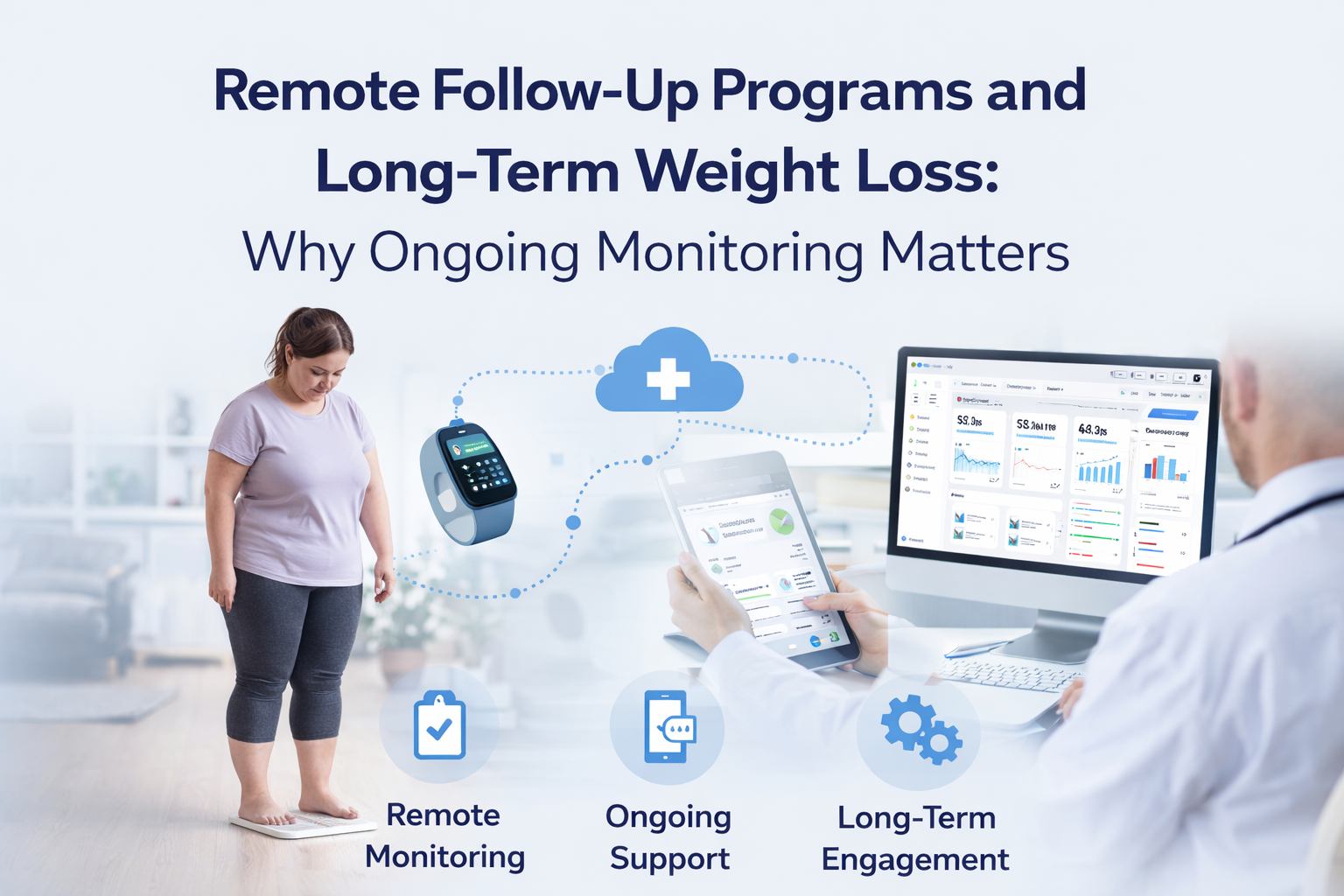
Remote Follow-Up Programs and Long-Term Weight Loss | Why Monitoring Matters
Long-term weight loss is one of the most difficult outcomes to sustain in healthcare. While many patients achieve short-term success through surgery, medication, or structured diet programs, relapse and weight regain remain common once formal treatment ends. Research increasingly shows that the absence of structured long-term follow-up is one of the main reasons weight loss fails over time.
Remote follow-up programs, often delivered through Remote Patient Monitoring (RPM) platforms, are designed to close this gap by supporting patients beyond the initial treatment phase.
Why Long-Term Weight Loss Often Fails
Weight loss failure is rarely caused by lack of motivation alone. Instead, it is driven by a combination of physiological, behavioral, and systemic factors.
Common reasons include:
- Loss of regular accountability after treatment ends
- Reduced follow-up frequency over time
- Behavioral fatigue and declining adherence
- Limited visibility into early warning signs of relapse
- Lack of structured support outside clinic visits
According to research published by the National Institutes of Health, many individuals regain a significant portion of lost weight within two to five years when long-term support is absent.
Source: https://www.ncbi.nlm.nih.gov/pmc/articles/PMC5764193/
The Role of Follow-Up in Successful Weight Management
Healthcare organizations increasingly recognize that weight management is a long-term condition, not a one-time intervention. Ongoing follow-up allows providers to identify changes in behavior, activity, or engagement before setbacks become permanent.
The World Health Organization emphasizes that chronic conditions require continuous monitoring and patient engagement rather than episodic care.
Source: https://www.who.int/health-topics/digital-health
Types of Remote Follow-Up Programs
Remote follow-up programs vary in intensity and structure. Successful programs often combine multiple approaches to maintain engagement over time.
1. Post-Treatment Follow-Up Programs
Used after bariatric surgery or medically supervised weight loss programs, these focus on:
- Long-term recovery monitoring
- Behavioral reinforcement
- Lifestyle consistency
Studies show that patients who remain engaged in structured follow-up programs experience better long-term outcomes than those lost to follow-up.
Source: https://pubmed.ncbi.nlm.nih.gov/25249568/
2. Remote Patient Monitoring (RPM) Programs
RPM programs use digital tools to track trends and engagement between visits. These programs support:
- Ongoing oversight without frequent in-person appointments
- Early identification of disengagement
- Consistent patient touchpoints
The Centers for Medicare and Medicaid Services (CMS) recognizes Remote Patient Monitoring as a care model that supports ongoing management outside traditional clinical settings.
Source: https://www.cms.gov/medicare/medicare-general-information/telehealth/remote-patient-monitoring
3. Behavioral and Lifestyle Follow-Up Programs
These programs emphasize:
- Habit reinforcement
- Accountability through regular check-ins
- Behavioral pattern recognition
Research shows that long-term behavior change requires repeated reinforcement, particularly during the first two to three years after weight loss.
Source: https://www.ncbi.nlm.nih.gov/pmc/articles/PMC5556590/
4. Hybrid Follow-Up Models
Hybrid programs combine:
- Periodic in-person visits
- Remote check-ins and monitoring
- Digital engagement tools
This model reduces the burden on both patients and providers while preserving continuity of care.
The Mayo Clinic highlights that hybrid and remote models can improve patient engagement and reduce barriers to long-term follow-up.
Source: https://www.mayoclinic.org/healthy-lifestyle/weight-loss/in-depth/weight-loss/art-20047752
Why Remote Follow-Up Improves Long-Term Outcomes
Remote follow-up programs address the most common points of failure in weight management.
Key benefits include:
- Continuous engagement between visits
- Earlier identification of disengagement or regression
- Reduced reliance on patient self-initiation
- Improved consistency of support over time
Digital follow-up does not replace clinical care. Instead, it extends care beyond the clinic, where long-term success is often determined.
The Shift Toward Continuous Care Models
Modern healthcare is moving away from episodic treatment toward continuous care models. Remote follow-up programs support this shift by allowing care teams to maintain visibility and connection without increasing in-person workload.
Cloud-based healthcare platforms, such as those supported by Amazon Web Services, enable scalable, secure infrastructure for long-term monitoring programs.
Source: https://aws.amazon.com/health/
Supporting Long-Term Weight Loss Through Remote Monitoring
Sustained weight loss requires more than an initial intervention. It requires structure, accountability, and ongoing support. Remote follow-up programs and RPM platforms provide the framework needed to help patients stay engaged long after treatment ends.
Programs that prioritize long-term follow-up are better positioned to:
- Reduce weight regain
- Improve patient confidence
- Strengthen outcomes across multi-year timelines
Learn More About Remote Follow-Up with Taqtik Health
Taqtik Health supports remote follow-up and monitoring programs designed to improve long-term engagement and outcomes.
👉 Learn more or sign up at: https://app.taqtikhealth.com
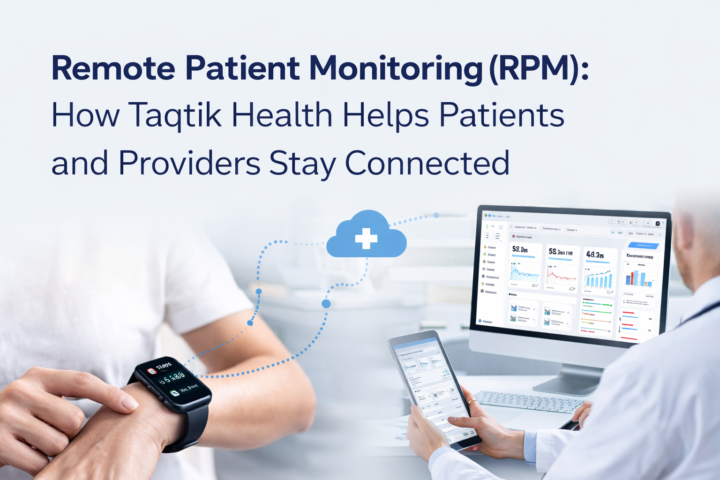
Remote Patient Monitoring (RPM): How Taqtik Health Helps Patients and Providers Stay Connected
Remote Patient Monitoring (RPM) is changing how healthcare providers support patients between visits. By using secure digital tools, RPM allows care teams to monitor patient progress remotely, improve engagement, and reduce administrative workload. Taqtik Health offers a modern Remote Patient Monitoring platform designed to support healthcare programs with simple onboarding, clear progress tracking, and secure...Continue reading→
Taqtik Health RPM: Your Partner in Post-Bariatric Surgery Success
At Taqtik Health, we understand that bariatric surgery is a powerful step toward a healthier, more fulfilling life. But we also know that the journey doesn’t end in the operating room. The real challenge and the real transformation happens in the months and years after your procedure. That’s why we created Taqtik Health Remote Patient...Continue reading→

Remote Patient Monitoring for Obesity: A Smarter Way to Support Surgical and Non-Surgical Patients
Losing weight and improving your health is a personal journey—and it doesn’t always require surgery. Whether you're preparing for bariatric surgery, recovering from it, or trying to manage your weight and health without surgery, one thing remains constant: support matters. At Taqtik Health, we believe long-term success comes from daily progress, consistent accountability, and expert...Continue reading→
How Remote Patient Monitoring (RPM) Supports Bariatric Surgery and Diabetes Care
Remote Patient Monitoring for Bariatric Surgery and Diabetes Management Choosing bariatric surgery or committing to better diabetes management is a life-changing decision—and it’s just the start of your journey to a healthier, happier you. Whether you’re preparing for surgery, healing afterward, or working to manage diabetes, having the right support makes all the difference. That’s...Continue reading→
Remote Patient Monitoring: A Game-Changer in Diabetes Management
In the face of a global diabetes epidemic, with the International Diabetes Federation estimating 537 million adults living with this condition worldwide in 2021 and projecting a rise to 643 million by 2030, innovative solutions like Remote Patient Monitoring (RPM) are more critical than ever. Taqtik Health leverages RPM technology to transform diabetes management, offering a new...Continue reading→
Future of Health: Over 800 Smart RPM Devices Supported by Taqtik Health
In today's rapidly evolving healthcare landscape, remote patient monitoring (RPM) has emerged as a cornerstone for enhancing patient care and health outcomes. At Taqtik Health, we are proud to integrate our RPM platform, a leading-edge solution that brings healthcare directly to patients, regardless of their location. With over 800 smart medical monitors, sensors, trackers, and...Continue reading→

Meet Dr. Juan Emerio Hernández – Bariatric Surgery, Mexico
Meet Dr. Juan Emerio Hernández who performs bariatric surgery in several cities in Mexico! If you are looking for one of the best certified bariatric and metabolic surgeons in Mexico, you are in the right place. Dr. Hernández offers laparoscopic gastric bypass and sleeve gastrectomy all-inclusive packages in Cancun, Matamoros, and in Guadalajara as well. All his...Continue reading→
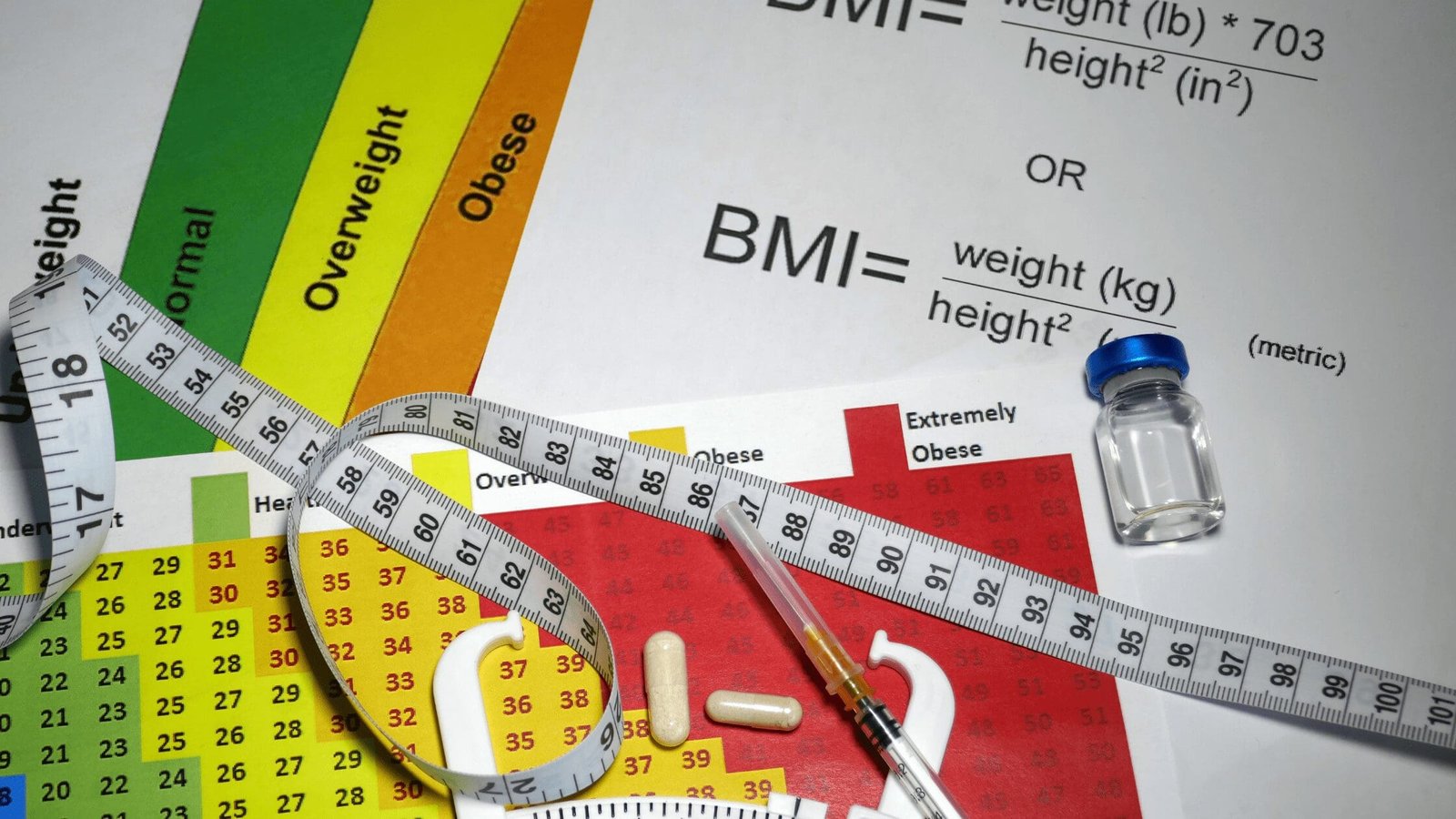
Remote Monitoring For Bariatric Patients
Remote Monitoring For Bariatric Patients Using remote monitoring for bariatric patients can be a very useful way to reduce hospitalizations and length of stay. Remote monitoring for bariatric patients can also help bariatric patients adjust to a new way of life, and it can help physicians identify health problems early. Long-Term Weight Loss Performing bariatric...Continue reading→