

How Remote Patient Monitoring Helps Bariatric Clinics Deliver Better Care
Bariatric surgery is a powerful tool, but long-term success depends on what happens after a patient leaves your clinic. The months and years following a procedure are filled with physical changes, nutritional adjustments, and emotional challenges that require consistent support. For many clinics, staying meaningfully connected to patients between appointments has always been a real logistical challenge.
Remote patient monitoring (RPM) is helping to close that gap. By using connected devices and digital check-ins to track patient data outside of the clinic setting, RPM gives care teams timely, actionable information and helps patients feel supported every step of the way.
Why Continuity of Care Matters in Bariatric Medicine
Weight-loss surgery is not a one-time intervention. It is the beginning of a long-term relationship between your clinic and your patient. The American Society for Metabolic and Bariatric Surgery recognizes that ongoing follow-up care is a core component of a successful bariatric program, and for good reason. Patients who stay engaged with their care team tend to maintain better results over time.
The challenge is that life gets in the way. Patients miss follow-up appointments. Early warning signs go unreported. Weight regain or nutritional deficiencies can develop quietly before your team has a chance to intervene. RPM creates a continuous thread of communication and monitoring that supports patients in their daily lives, not just in your waiting room.
What RPM Looks Like in a Bariatric Setting
In practice, remote patient monitoring for bariatric patients typically involves connected devices such as smart scales and blood pressure cuffs that automatically transmit readings to your care team. Patients may also complete regular digital check-ins covering symptoms, dietary habits, and how they are feeling overall. Your clinical staff can review this data through a centralized dashboard, flag concerns, and reach out proactively when something warrants attention.
This kind of ongoing visibility helps your team catch issues early, personalize follow-up conversations, and allocate staff time where it is genuinely needed. It also gives patients a sense of accountability and connection that can be genuinely motivating during the harder stretches of their journey.
Billing and Compliance Considerations
One practical benefit worth noting is that RPM services may be billable under established Medicare and commercial insurance frameworks. CMS has outlined specific CPT codes covering remote physiologic monitoring, including device setup, data collection, and care management time. Reviewing the CMS guidelines on remote patient monitoring with your billing team is a reasonable first step to understanding how RPM might fit into your clinic’s financial model.
Proper documentation and clinical oversight remain essential, and any RPM program should be implemented in line with your state regulations and payer requirements.
The Role of Community in Long-Term Success
Beyond clinical monitoring, there is growing recognition that social support plays a meaningful role in helping patients sustain healthy behaviors over time. Platforms that combine RPM with community features, such as peer groups, messaging, and educational resources, address both the clinical and human sides of recovery. The World Health Organization has long emphasized that health outcomes are shaped not just by medical interventions but by the environments and support systems surrounding patients.
Building that environment is something your clinic can do intentionally, and technology can help you scale it.
Ready to Strengthen Your Program?
If you are exploring how remote patient monitoring can work within your bariatric practice, or if you are already using Taqtik Health and want to review your program settings and patient data, your team can access everything through the clinic portal. We are here to help you build a program that keeps your patients connected, supported, and moving in the right direction.

Reducing Post-Op Complications Through Structured Remote Monitoring
For bariatric clinics, the weeks and months after surgery are among the most critical for patient outcomes. Structured remote patient monitoring gives your care team the visibility and tools to catch complications early and support patients when they need it most.Continue reading→

Reducing Post-Op Complications Through Structured Remote Monitoring
Post-operative complications remain one of the greatest challenges in bariatric care. Structured remote patient monitoring gives your clinic a practical way to stay connected with patients during the weeks that matter most.Continue reading→

What Bariatric Clinics Should Look for in a Remote Patient Monitoring Platform
Choosing the right RPM platform can transform how your bariatric clinic supports patients after surgery. Here is what to prioritize when evaluating your options.Continue reading→
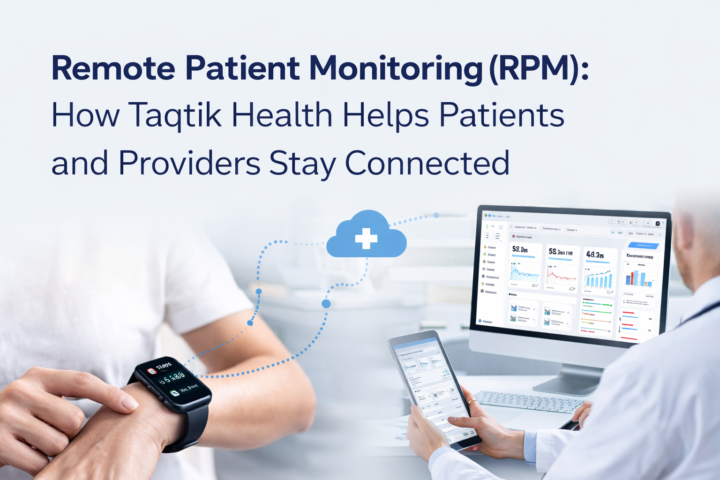
Remote Patient Monitoring (RPM): How Taqtik Health Helps Patients and Providers Stay Connected
Remote Patient Monitoring (RPM) is changing how healthcare providers support patients between visits. By using secure digital tools, RPM allows care teams to monitor patient progress remotely, improve engagement, and reduce administrative workload. Taqtik Health offers a modern Remote Patient Monitoring platform designed to support healthcare programs with simple onboarding, clear progress tracking, and secure...Continue reading→
Taqtik Health RPM: Your Partner in Post-Bariatric Surgery Success
At Taqtik Health, we understand that bariatric surgery is a powerful step toward a healthier, more fulfilling life. But we also know that the journey doesn’t end in the operating room. The real challenge and the real transformation happens in the months and years after your procedure. That’s why we created Taqtik Health Remote Patient...Continue reading→