
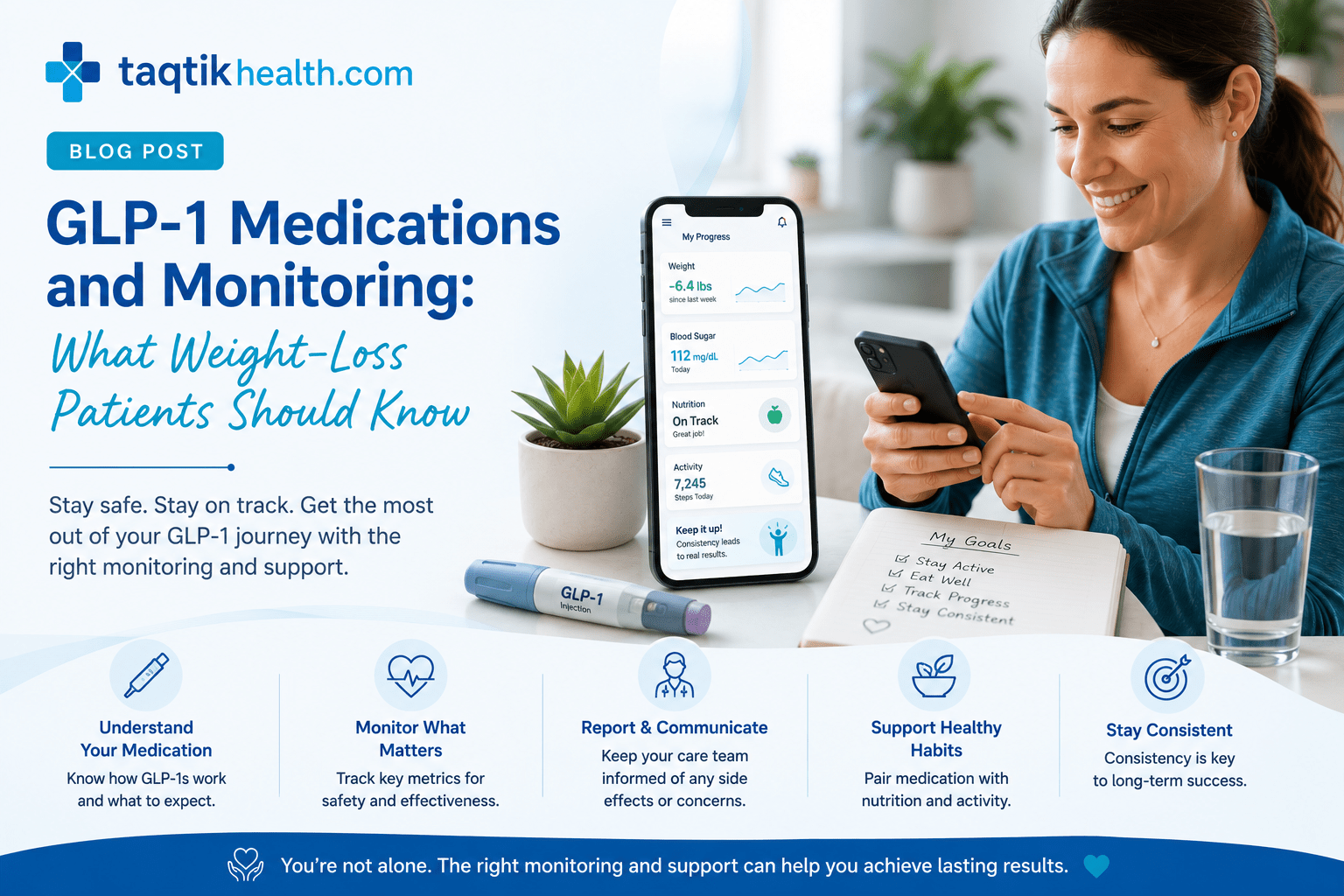
GLP-1 Medications and Monitoring: What Weight-Loss Patients Should Know
Over the past few years, GLP-1 receptor agonists have become one of the most talked-about tools in weight management. Whether you are preparing for bariatric surgery, recovering from a procedure, or pursuing a non-surgical weight-loss path, you may have heard your care team mention medications like semaglutide or tirzepatide. Understanding how these medications work and why ongoing monitoring matters can help you feel more confident and in control of your journey.
What Are GLP-1 Medications?
GLP-1 stands for glucagon-like peptide-1, a hormone your body naturally produces to help regulate blood sugar and appetite. GLP-1 receptor agonists mimic this hormone, helping patients feel fuller sooner, reducing cravings, and supporting more stable blood sugar levels. Originally developed to treat type 2 diabetes, several of these medications have now received regulatory approval specifically for chronic weight management.
If you would like a thorough overview of how these medications work and who may be a candidate, the Mayo Clinic’s guide to prescription weight-loss medications is an excellent starting point written in plain, accessible language.
Why Monitoring Matters With GLP-1 Therapy
GLP-1 medications can be highly effective, but they are not a set-it-and-forget-it solution. Your body changes as you lose weight, and your care team needs regular information to keep your treatment plan safe and appropriate. Here are a few reasons consistent monitoring is so important:
- Side effect management. Nausea, changes in appetite, and gastrointestinal discomfort are common, especially early in treatment. Tracking how you feel between appointments helps your provider make timely adjustments.
- Nutritional balance. Eating less is the goal, but eating well still matters. Monitoring helps catch early signs of nutritional gaps before they become larger problems, which is especially critical for patients who have also had bariatric surgery.
- Weight and vital trends. Regular weight check-ins, blood pressure readings, and other biometric data give your provider a clearer picture than a single in-office measurement ever could.
The American Society for Metabolic and Bariatric Surgery (ASMBS) emphasizes that long-term follow-up care is one of the strongest predictors of lasting success after weight-loss treatment, whether surgical or medical.
How Remote Patient Monitoring Supports Your Care
Remote patient monitoring, commonly called RPM, allows your care team to receive health data from you between clinic visits using connected devices and digital tools. For patients on GLP-1 medications, this means your provider can spot trends, respond to concerns, and adjust your plan without requiring you to come in for every question or reading.
RPM is a recognized and reimbursable model of care. If you are curious about how it is structured from a healthcare system perspective, CMS.gov provides information on remote patient monitoring coverage and billing codes that your clinic may already be using.
At Taqtik Health, our platform is built specifically for bariatric and weight-loss patients. That means the check-ins, symptom trackers, and biometric tools are designed with your journey in mind, not adapted from a generic model.
Taking the Next Step
Whether you are just starting a GLP-1 medication, managing your recovery after surgery, or simply trying to stay on track between appointments, consistent monitoring is one of the most practical things you can do for your long-term health. You do not have to wait until your next clinic visit to stay connected with your care.
Ready to get started? Log in or sign up through your patient portal to begin remote monitoring with your care team today. Your health does not pause between appointments, and neither should your support.