
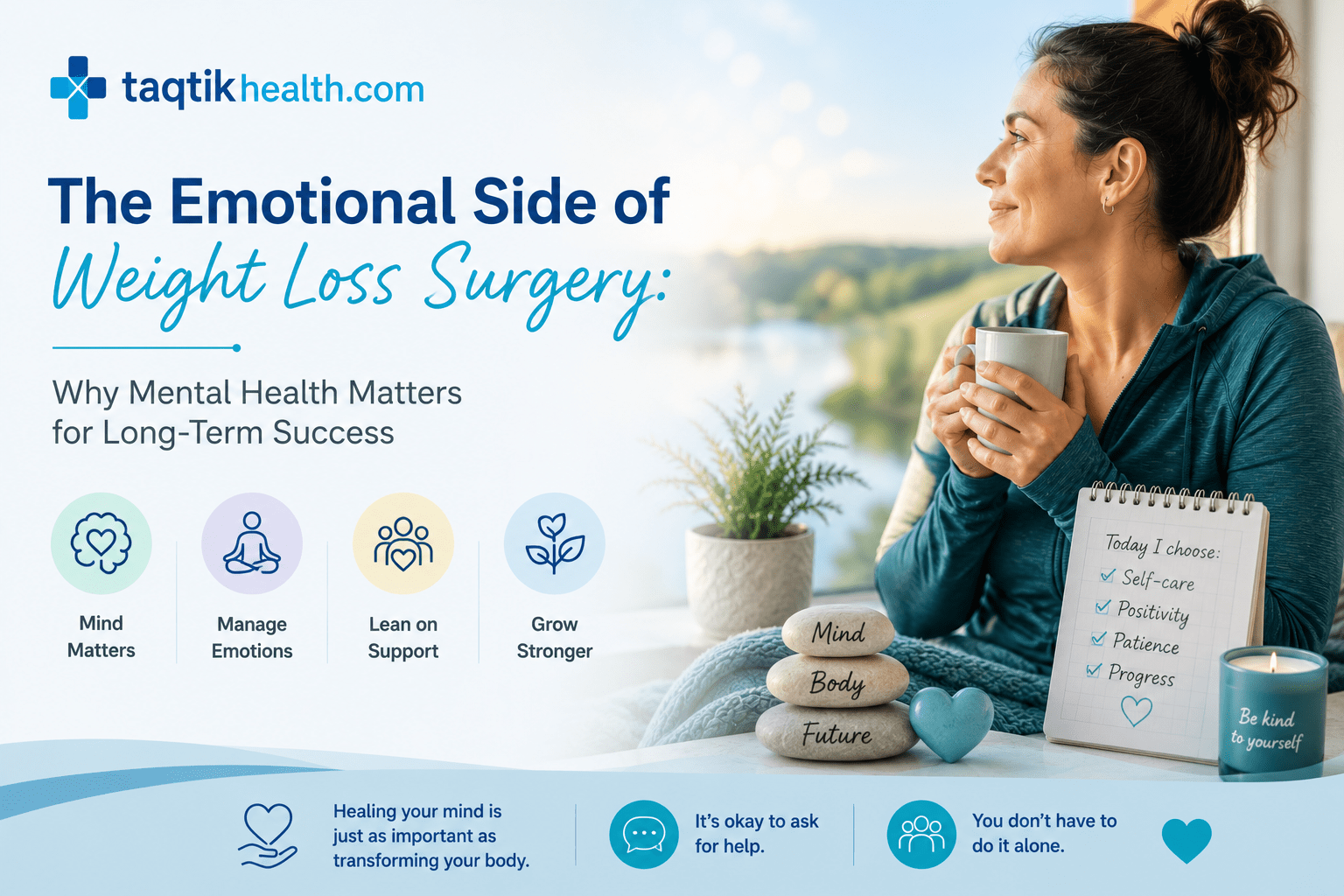
The Emotional Side of Weight Loss Surgery: Why Mental Health Matters for Long-Term Success
Deciding to have bariatric or weight loss surgery is a bold, hopeful step. You have likely spent months preparing physically, meeting with surgeons, adjusting your diet, and imagining what life might feel like on the other side. But one part of the journey that often catches patients off guard is the emotional and psychological shift that follows surgery. The good news is that with the right support, most patients navigate this transition successfully and go on to live healthier, more fulfilling lives.
Why Mental Health Is Part of Your Recovery
Weight loss surgery is a powerful tool, but it works best when it is supported by lasting behavioral and emotional change. Food is deeply tied to our routines, our relationships, and our feelings. After surgery, many patients find that habits they relied on for comfort or stress relief need to change as well. This is completely normal, and it is something your care team is trained to help you with.
Some patients experience a dip in mood in the months following surgery, even when the physical results are going well. Hormonal changes, adjusting to a new body image, and shifts in social dynamics can all play a role. Recognizing these feelings early and talking about them openly with your provider is one of the most important things you can do. The American Society for Metabolic and Bariatric Surgery (ASMBS) emphasizes that comprehensive bariatric care includes psychological support before and after surgery, not just nutritional and medical guidance.
Common Emotional Experiences After Surgery
Every patient’s journey is unique, but there are some emotional themes that come up frequently in bariatric recovery:
- Grief over food: Letting go of certain foods or eating patterns can feel like a real loss, even when you know the change is positive.
- Changes in relationships: As your body and habits change, the dynamics in your personal relationships may shift in unexpected ways.
- Body image adjustment: Rapid weight loss does not always lead to an immediate sense of confidence or comfort in your body. It can take time for your self-perception to catch up with your physical changes.
- Anxiety about regain: Fear of returning to old patterns is common and can become overwhelming if left unaddressed.
If any of these resonate with you, please know that you are not alone and that these experiences are widely recognized in bariatric medicine. The Mayo Clinic notes that ongoing behavioral support is a key component of successful long-term outcomes after bariatric procedures.
Building a Support System That Works for You
Long-term success after weight loss surgery rarely happens in isolation. Connecting with a therapist who has experience working with bariatric patients, joining a support group, and staying in close contact with your care team between appointments are all steps that can make a meaningful difference. Many clinics now offer structured follow-up programs that extend well beyond your in-person visits, helping you stay accountable and supported during the months and years ahead.
Remote patient monitoring is one way your care team can stay connected with you between visits, tracking how you are feeling physically and prompting check-ins that keep your recovery on course. The World Health Organization recognizes obesity as a complex condition requiring long-term, individualized management, which is exactly why continuous support matters so much.
Take the Next Step in Your Recovery
Your bariatric journey does not end when you leave the hospital. It is an ongoing process, and having the right tools and people around you makes all the difference. Taqtik Health is here to help you and your care team stay connected every step of the way. Log in or sign up through your patient portal to start remote monitoring and take an active role in your recovery today.