
Navigating Healthcare After Job Loss: Options and Strategies for Coverage
Losing your job is stressful enough without the added worry of losing your healthcare coverage. For many individuals in Western countries, health insurance is tied to employment, leaving them vulnerable during times of economic uncertainty and widespread layoffs. Taqtik Health explores the options available to ensure you can access quality healthcare even when you’re between jobs.
The Healthcare Conundrum of Job Loss
In countries where employer-sponsored health insurance is the norm, job loss often equates to the sudden loss of access to critical healthcare services. For families, the financial and emotional strain can be overwhelming. However, a range of options exists to help bridge the gap and ensure your health isn’t compromised.
1. Understand Your Current Coverage
Before making any decisions, it’s important to assess your current health insurance plan. Many plans offer a grace period or continuation options under certain laws and policies, which can provide temporary coverage while you explore long-term solutions.
COBRA Continuation Coverage
In the United States, the Consolidated Omnibus Budget Reconciliation Act (COBRA) allows individuals to continue their employer-sponsored health insurance for up to 18 months. While COBRA can be expensive—since you’ll need to pay the full premium—it provides continuity of care and protects you from unexpected medical expenses during your transition.
2. Government-Funded Healthcare Programs
Depending on where you live, government-funded programs may provide an alternative to employer-sponsored coverage. These programs often cater to unemployed individuals, low-income families, or those with specific health conditions.
Medicaid and CHIP
In the U.S., Medicaid provides free or low-cost coverage to eligible individuals and families. The Children’s Health Insurance Program (CHIP) ensures that children in low-income households have access to healthcare services.
Universal Healthcare Access
Countries with universal healthcare systems, such as Canada or the U.K., ensure that basic healthcare services remain accessible regardless of employment status. However, additional private insurance may be necessary to cover services not included in these systems.
3. Private Health Insurance Options
Private insurance plans can be purchased directly from insurers or through health insurance marketplaces. These plans come with varying levels of coverage and costs, allowing you to choose one that fits your needs and budget.
Health Insurance Marketplaces
In countries like the U.S., health insurance marketplaces established under the Affordable Care Act (ACA) offer a wide range of plans with potential subsidies based on income. Open enrollment periods and special enrollment windows triggered by job loss allow you to secure coverage quickly.
4. Short-Term Health Insurance
Short-term health insurance plans provide coverage for a limited duration, typically 1–12 months. These plans are less expensive than traditional health insurance but may come with limited benefits and exclusions for pre-existing conditions.
Pros of Short-Term Plans
- Affordable monthly premiums
- Quick approval process
- Flexibility to bridge the gap while seeking full-time employment
Cons of Short-Term Plans
- Limited coverage for essential health benefits
- May exclude individuals with pre-existing conditions
- Not renewable in many cases
5. Health Savings Accounts (HSAs)
If you previously had a high-deductible health plan (HDHP), you might have funds saved in a Health Savings Account (HSA). These accounts allow you to pay for qualified medical expenses tax-free, offering a financial cushion during times of unemployment.
Maximizing HSA Benefits
- Use HSA funds for doctor visits, prescription medications, and over-the-counter health products.
- Avoid withdrawing funds for non-medical expenses to maintain tax advantages.
6. Community Healthcare Resources
Many communities offer low-cost or free healthcare services for uninsured individuals. These resources can provide essential care while you work to secure long-term health insurance.
Community Health Centers
Nonprofit clinics and health centers provide affordable medical, dental, and mental health services. Federally Qualified Health Centers (FQHCs) in the U.S. are a prime example.
Patient Assistance Programs
Some pharmaceutical companies and nonprofit organizations offer programs to help uninsured individuals access prescription medications at reduced costs or for free.
7. Medical Tourism as a Cost-Effective Solution
Medical tourism is an increasingly popular option for individuals seeking affordable healthcare. Taqtik Health connects patients with accredited international hospitals and clinics offering high-quality care at a fraction of the cost in Western countries.
Popular Medical Tourism Destinations
- Mexico: Affordable dental work, bariatric surgery, and cosmetic procedures.
- Thailand: Renowned for advanced medical facilities and affordable elective surgeries.
- India: Expertise in orthopedic, cardiac, and cancer treatments at competitive prices.
Benefits of Medical Tourism
- Substantial cost savings
- Access to world-class medical professionals
- Comprehensive care packages, including accommodations and recovery support
8. Health and Wellness Communities
Joining a health and wellness community can provide both support and practical advice for managing healthcare costs. Online forums, social media groups, and local meetups can connect you with individuals who have faced similar challenges.
Taqtik Health Community
The Taqtik Health Community offers a platform for sharing resources, tips, and solutions for maintaining health and wellness during unemployment. Members gain access to expert advice and exclusive healthcare packages tailored to their needs.
9. Preventive Care and Lifestyle Adjustments
Prevention is often the best medicine. Adopting a healthy lifestyle can reduce the risk of chronic illnesses and minimize the need for costly medical treatments.
Tips for Maintaining Health
- Stay active with regular exercise
- Follow a balanced diet rich in fruits, vegetables, and lean proteins
- Manage stress through mindfulness, meditation, or yoga
- Keep up with routine vaccinations and health screenings
10. Plan Ahead for Future Security
Job loss is a stark reminder of the importance of financial and health planning. Taking steps now to secure your future can provide peace of mind and financial stability.
Consider Supplemental Insurance
Supplemental insurance plans, such as critical illness or accident insurance, provide additional coverage for unexpected events and are often independent of your primary health insurance.
Build an Emergency Fund
An emergency savings fund can cover essential expenses, including health insurance premiums, during periods of unemployment.
Conclusion: Taking Control of Your Healthcare
Losing your job doesn’t have to mean losing access to quality healthcare. With a proactive approach and a clear understanding of available options, you can protect yourself and your family during times of uncertainty. Taqtik Health is committed to empowering individuals to navigate their health journeys, offering resources and solutions tailored to your needs.
For more information on healthcare options, medical tourism packages, or joining the Taqtik Health Community, contact us today. Your health is our priority, every step of the way.
Remote Patient Monitoring for Weight Loss: Support for Bariatric Patients and GLP-1 Users
Obesity is not just about losing weight, it is about keeping it off long term. Whether you are preparing for bariatric surgery, recovering after surgery, or using GLP-1 medications, staying consistent is the biggest challenge. That is where Remote Patient Monitoring (RPM) comes in. At Taqtik Health, we use wearable technology and real-time data to...Continue reading→
Remote Follow-Up Programs and Long-Term Weight Loss | Why Monitoring Matters
Long-term weight loss is one of the most difficult outcomes to sustain in healthcare. While many patients achieve short-term success through surgery, medication, or structured diet programs, relapse and weight regain remain common once formal treatment ends. Research increasingly shows that the absence of structured long-term follow-up is one of the main reasons weight loss...Continue reading→
Remote Patient Monitoring (RPM): How Taqtik Health Helps Patients and Providers Stay Connected
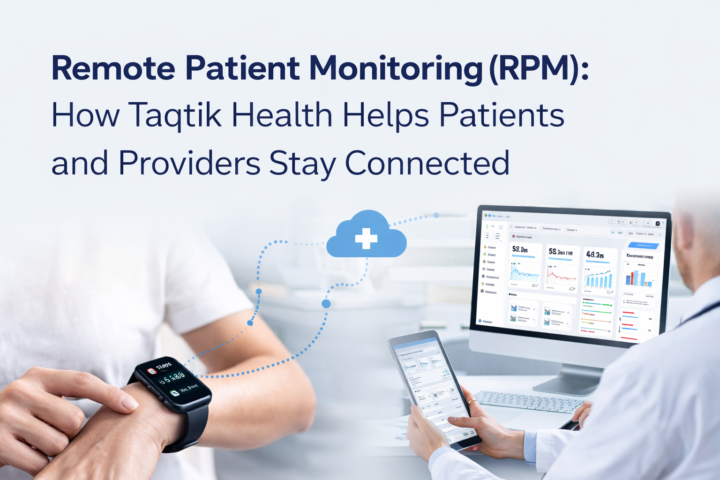
Remote Patient Monitoring (RPM) is changing how healthcare providers support patients between visits. By using secure digital tools, RPM allows care teams to monitor patient progress remotely, improve engagement, and reduce administrative workload. Taqtik Health offers a modern Remote Patient Monitoring platform designed to support healthcare programs with simple onboarding, clear progress tracking, and secure...Continue reading→

Taqtik Health RPM: Your Partner in Post-Bariatric Surgery Success
At Taqtik Health, we understand that bariatric surgery is a powerful step toward a healthier, more fulfilling life. But we also know that the journey doesn’t end in the operating room. The real challenge and the real transformation happens in the months and years after your procedure. That’s why we created Taqtik Health Remote Patient...Continue reading→
Post-Bariatric and GLP-1 Post-Care to Maximize Results
Post-Bariatric and GLP-1 Post-Care to Maximize Results | Taqtik Health Introduction Undergoing bariatric surgery or starting GLP-1 (glucagon-like peptide-1) agonist treatments like semaglutide (Ozempic, Wegovy) or tirzepatide (Mounjaro, Zepbound) is a major step toward long-term weight loss and improved metabolic health. But these treatments are only part of the journey. What you do after surgery...Continue reading→

Remote Patient Monitoring for Obesity: A Smarter Way to Support Surgical and Non-Surgical Patients
Losing weight and improving your health is a personal journey—and it doesn’t always require surgery. Whether you're preparing for bariatric surgery, recovering from it, or trying to manage your weight and health without surgery, one thing remains constant: support matters. At Taqtik Health, we believe long-term success comes from daily progress, consistent accountability, and expert...Continue reading→

How Remote Patient Monitoring (RPM) Supports Bariatric Surgery and Diabetes Care
Remote Patient Monitoring for Bariatric Surgery and Diabetes Management Choosing bariatric surgery or committing to better diabetes management is a life-changing decision—and it’s just the start of your journey to a healthier, happier you. Whether you’re preparing for surgery, healing afterward, or working to manage diabetes, having the right support makes all the difference. That’s...Continue reading→
Advancing Value-Based Healthcare Through Cross-Border Health
At Taqtik Health, we are dedicated to delivering value-based healthcare by providing patients with affordable, high-quality, and patient-centered medical solutions. Our platform connects individuals with top-tier healthcare providers worldwide, ensuring they receive the best possible care at the best value through cross-border healthcare. How Taqtik Health Contributes to Value-Based Healthcare 1. Affordable, High-Quality Care Without...Continue reading→
Bariatric Center J.L. Prado in Tijuana, Mexico: Your Destination for Advanced Weight Loss Surgery
Bariatric surgery has become a life-changing solution for individuals struggling with obesity and its related health complications. In recent years, Tijuana, Mexico, has emerged as a leading destination for affordable and high-quality bariatric procedures. One of the most trusted names in this field is Bariatric Center J.L. Prado, where a team of skilled surgeons, cutting-edge...Continue reading→
Transform Your Life with Our Bariatric Surgery Promotion in Tijuana Mexico
Transform Your Life with Bariatric Surgery at J.L. Prado Surgical Center in Tijuana, Mexico, with Dr. Fredy Lopez Are you ready to take control of your health and achieve long-term weight loss? Taqtik Health is excited to offer a special promotion for bariatric surgery at J.L. Prado Surgical Center with the renowned Dr. Fredy Lopez,...Continue reading→